
As refounded by Rudolf Steiner at Christmas 1923, the core purpose of the Anthroposophical Society is to further the work of the School of Spiritual Science, whose own purpose and that of those who join the School is to enable ‘the principle of initiation to become the principle of civilisation.’ Thereby, the traditional separation of inner and outer, esoteric and exoteric aspects of life is replaced by them becoming the two sides of one coin, as it were, so that spiritual science can be brought to bear on human affairs.
One condition
Membership of the Society can be seen as offering two steps of engagement regarding anthroposophy and spiritual science. Signifying recognition of these as a main reference in one’s life, the first step is to join the Society – something, however, that entails no responsibility for either.
In contrast, the second step occurs when in one’s biography one decides to represent both and so joins the School. Becoming a ‘representant’ of anthroposophy in this way is the sole condition of membership of the School (see Marc Desaules), although, as in any scientific community, two other considerations are also assumed: (i) that one acts mindfully of one’s colleagues in the School and (ii) that one is competent in its methodology.
Three Classes
As refounded by Rudolf Steiner at Christmas 1923, the core purpose of the Anthroposophical Society is to further the work of the School of Spiritual Science, whose own purpose and that of those who join the School is to enable ‘the principle of initiation to become the principle of civilisation.’ Thereby, the traditional separation of inner and outer, esoteric and exoteric aspects of life is replaced by them becoming the two sides of one coin, as it were, so that spiritual science can be brought to bear on human affairs.
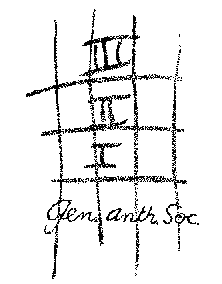
When he inaugurated the School at Christmas 1923, Rudolf Steiner described it on 27 December 1923 as comprising three classes and n sections (initially five, now twelve). His explanation was accompanied by the adjacent grid-like drawing, which illustrates how, when one chooses to join the School, one does so as a colleague rather than as a pupil of Rudolf Steiner and via the first class of the School.
In due course, the other two classes were to be added, but Rudolf Steiner died before this became a clear or possible step. That said, the idea and inner fact of all three classes can be understood in terms of tasks, seeds or qualities. (See ‘Tasks, Seeds, Qualities and the Three Classes of the School of Spiritual Science – A Tribute to Jörgen Smit,’ in The Deed of Rudolf Steiner – Sociological Masterpiece / Economic Testament by Christopher Houghton Budd.)
Twelve Sections
As refounded by Rudolf Steiner at Christmas 1923, the core purpose of the Anthroposophical Society is to further the work of the School of Spiritual Science, whose own purpose and that of those who join the School is to enable ‘the principle of initiation to become the principle of civilisation.’ Thereby, the traditional separation of inner and outer, esoteric and exoteric aspects of life is replaced by them becoming the two sides of one coin, as it were, so that spiritual science can be brought to bear on human affairs.
When he inaugurated the School at Christmas 1923, Rudolf Steiner described it on 27 December 1923 as comprising three classes and n sections (initially five, now twelve). His explanation was accompanied by the adjacent grid-like drawing, which illustrates how, when one chooses to join the School, one does so as a colleague rather than as a pupil of Rudolf Steiner and via the first class of the School.
The sections are conceived as linked to fields of life where there is a need to outgrow today’s materialist and reductionist bias. The sections are not established in the abstract, but where there is a leader of standing in that field in society at large. Depending on one’s karma and biography, one can also become part of the other sections if one chooses to place one’s professional life in those contexts – for example, as a doctor in the Medical Section. In this way, through the endeavours of those active in its sections the School gives fresh, spiritual scientific, ground to practical social life. As to the matching of the sections to humanity’s affairs, there are currently 12 sections related to agriculture, medicine, the social sciences, the arts, etc. (See here for details.)
Nineteen Lessons
As refounded by Rudolf Steiner at Christmas 1923, the core purpose of the Anthroposophical Society is to further the work of the School of Spiritual Science, whose own purpose and that of those who join the School is to enable ‘the principle of initiation to become the principle of civilisation.’ Thereby, the traditional separation of inner and outer, esoteric and exoteric aspects of life is replaced by them becoming the two sides of one coin, as it were, so that spiritual science can be brought to bear on human affairs.
Membership of the Society can be seen as offering two steps of engagement regarding anthroposophy and spiritual science. Signifying recognition of these as a main reference in one’s life, the first step is to join the Society – something, however, that entails no responsibility for either. In contrast, the second step occurs when in one’s biography one decides to represent both and so joins the School in its first, of three, classes, becoming, in Rudolf Steiner’s words, a ‘representant’ of anthroposophy and spiritual science.
As regards the first class of the School, 50 days after he inaugurated it at Christmas 1923, Steiner began to give a series of what became 19 lessons – initially discretely and intimately imparted, now freely available on the internet – which describe the concrete inner experiences a truly scientific attitude of mind will be confronted by today. The lessons refer to the path or journey one will then likely find oneself on, and serve as a guide to its healthy and wise navigation.